Journal · 21 October 2026 · CarSeen team
Routemaster Bus Hire for Filming in London and the UK
Published · Updated
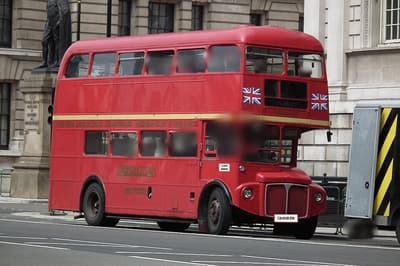
Few vehicles say London as instantly as a red Routemaster. Its rounded front, open rear platform and conductor's bell belong to decades of the city's life, and it appears on screen whenever a story wants to place its audience in the capital, past or present. Buses also make remarkable sets in their own right: a top deck for a conversation, a platform for a chase, a lower saloon for a party scene.
This guide explains what to consider when casting a Routemaster or other vintage bus for film, TV, commercials, music videos and photoshoots.
Why is the Routemaster so popular on screen?
The Routemaster was designed for London Transport and entered service in the 1950s, with production continuing through the 1960s. It remained in everyday passenger use in London for decades, so it suits a long span of stories, from the late 1950s to the early 2000s. It is also one of the most recognised British vehicles internationally, which makes it popular with commercials and fashion shoots aimed at audiences abroad.
Beyond London, vintage double-deckers and single-deckers from other operators suit stories set in provincial towns, seaside resorts and countryside routes. Our bus and coach category shows the range on CarSeen, including AEC vehicles.
Is a Routemaster right for my story's period?
Check the details. The Routemaster suits London scenes from its introduction through to its withdrawal from most regular routes in the mid-2000s, but liveries, adverts and destination blinds changed over that time. For a story set earlier, an older bus type will be more accurate. For a story set after the mid-2000s, a modern bus or a heritage-route Routemaster may be more appropriate. Contemporary photographs are the best guide, and owners and preservation groups are often extremely knowledgeable.
For other period vehicles in the same scene, see our guides to the 1920s to 1950s and the 1960s to 1980s.
What practical questions should you ask about a bus?
A bus is a large vehicle with large needs.
- Access. Can it physically reach the location? Height, width, length, turning circles, weight limits, low bridges and overhanging trees all matter.
- Parking. Where will it wait at the unit base, and is that space secured?
- Driving. Buses need a driver with the appropriate licence. Usually the owner or their nominated driver drives.
- Time. Vintage buses travel slowly; allow for the journey to and from set.
- Interior use. How many cast and crew will be aboard, and is filming upstairs, downstairs or on the platform?
Can you film inside a Routemaster?
Yes, and interiors are one of the bus's great strengths. The lower saloon, stairs and top deck give a variety of set-ups in a compact space. Plan carefully: the space is tight for camera, lighting and sound, and the number of people aboard must be agreed with the owner. Static interior scenes are much simpler than scenes filmed while moving.
Can a vintage bus be filmed moving on public roads?
It can, with permission and planning. Filming on public roads in the UK usually involves the local authority and often the police, and in London specific permissions apply in many areas. A bus moving through a street is a significant operation. See filming car scenes on public roads in the UK and, for central London charges, ULEZ and the Congestion Charge for classic vehicles.
Can a bus be dressed for a scene?
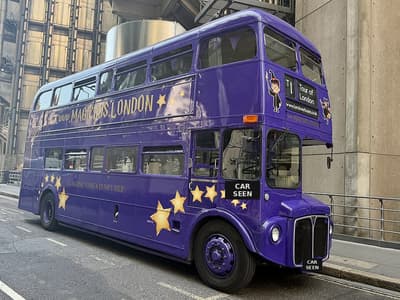
Often, with the owner's agreement. Destination blinds, adverts, route numbers and interior notices can transform a bus's period or location. Agree in advance what can be changed, who will make the changes and how they will be removed. Preserved buses are often restored to a specific livery and era, and owners understandably care about keeping them authentic.
What about buses for events, music videos and photoshoots?
Buses work beautifully as backdrops and locations. A Routemaster parked on a quiet street can host a fashion shoot, a music video performance on the top deck or a branded moment for social content. Static use is simpler to plan than driving and still delivers the iconic look. See our music video car hire and photoshoot car hire in London pages.
What examples are listed on CarSeen?
The catalogue includes Routemaster double-deckers such as a 1959 AEC Routemaster and a 1966 AEC Routemaster. As with every listing, the photographs and descriptions come from the owners, and availability depends on dates and the details of the job. If neither suits your period or livery, a brief lets us search more widely.
How long does a bus booking take to arrange?
Longer than a car, as a rule. Access checks, route planning, driver availability and permissions all take time, and preserved buses are often committed to rallies, heritage events and private hires during the summer season. Briefing early, with a little flexibility on dates, gives the best chance of securing the right vehicle. If the location is uncertain, it helps to share the shortlist of possible sites so the owner can flag any access problems before a recce.
How should you brief a bus for filming?
Include the story date and setting, the route or town the bus should suggest, whether it must move, how many people will be aboard, the location and access constraints, and any dressing required. Our guide to how to brief a picture car covers the rest of the brief.
How does CarSeen help with bus hire for filming?
CarSeen works with private owners of buses, coaches and other large vehicles alongside cars. When you send a brief, we check period details, access needs, driving arrangements and owner preferences before a bus reaches your shortlist. You can also explore TV production vehicle hire and picture vehicle hire across the UK.
Related: Browse picture cars for film and TV, explore period cars for film by decade and TV car hire, or read about choosing a picture car hire company and picture car rental. Further reading: buses and coaches, AEC vehicles, picture car hire in London, TV production vehicle hire, picture vehicle hire UK, music video car hire, photoshoot car hire in London, filming car scenes on public roads, ULEZ and the Congestion Charge on a London shoot, send a brief.
Ready to cast a car? Send us a brief and we'll come back with options.
FAQs
Can I hire a Routemaster bus for a film shoot?
Yes. Preserved Routemasters are owned privately and by groups across the UK and can be booked for filming.
Who drives a vintage bus on set?
Usually the owner or a nominated driver with the appropriate licence.
Can we film on the top deck of a Routemaster?
Yes, with the owner's agreement on the number of people aboard and how the scene is filmed.
Is a Routemaster correct for a 1970s London scene?
Generally yes, as Routemasters were common in London then, but check livery and adverts against period photographs.
Can a bus be dressed with different adverts and route numbers?
Often, if the owner agrees in advance on what can be changed and how.
How far ahead should I book a vintage bus?
As early as possible, particularly for summer dates, because access checks, drivers and permissions take time and many buses attend events in season.
Related reading
- Picture car hire companies in the UK: how to choose
- How to film driving scenes: low loaders, A-frames, tracking vehicles and static set-ups
- What does a picture car coordinator do, and how do you brief one?
- Filming with police cars and uniforms in the UK: what the rules say
- ULEZ and the Congestion Charge: what period picture cars pay on a London shoot
- Number plates for filming: dating, period plates and the rules