Journal

Ten cars that stole the scene

They don’t speak. They don’t audition. And yet, somehow, they get the close-up.

On a good production, the car is cast like an actor — silhouette first, then colour, then the way it sits in the frame. One wrong badge and the decade collapses. One right one and the audience leans in before anyone says a line.

This is a shortlist of ten vehicles that have done that work on film and television: the chase engines, the detective saloons, the getaway toys, the London shorthand. Not a ranking. Not a claim that any single chassis “is” the movie. Just the cars productions still reach for when the scene needs a character with wheels.

We keep the language soft on purpose. Many of these stories involved fleets, lookalikes, press cars and later replicas. What matters for casting is the silhouette the culture remembers — and how that silhouette still reads on a contemporary set.

01Goldfinger / 1964

Aston Martin DB5

Ian Fleming put Bond in a DB Mark III. By the time Goldfinger was shooting, the DB5 was the new car — and Eon made sure the camera knew it.

Aston Martin supplied the prototype as the gadget “effects” car and a production DB5 for driving work; further press cars followed. Special effects (John Stears and team) layered the folklore: ejector seat, machine guns, tyre slashers, revolving plates. Later Bond films brought the shape back — sometimes as continuations, sometimes as carefully built stand-ins. The effects prototype’s later theft from a Boca Raton hangar (1997) remains a soft mystery of whereabouts unverified. Auction prices for Bond-linked DB5s sit in the multi-million range; the cultural afterlife is quieter and louder at once: the car as product placement that never quite left the room.

What the audience keeps is simpler. Silver Birch. Wire wheels. A calm face that means trouble.

On set today:Soft shorthand for elegance-with-edge — period spy, prestige London, or a knowing Bond homage. A Silver Birch DB5 (or a careful lookalike) still reads instantly without dialogue.
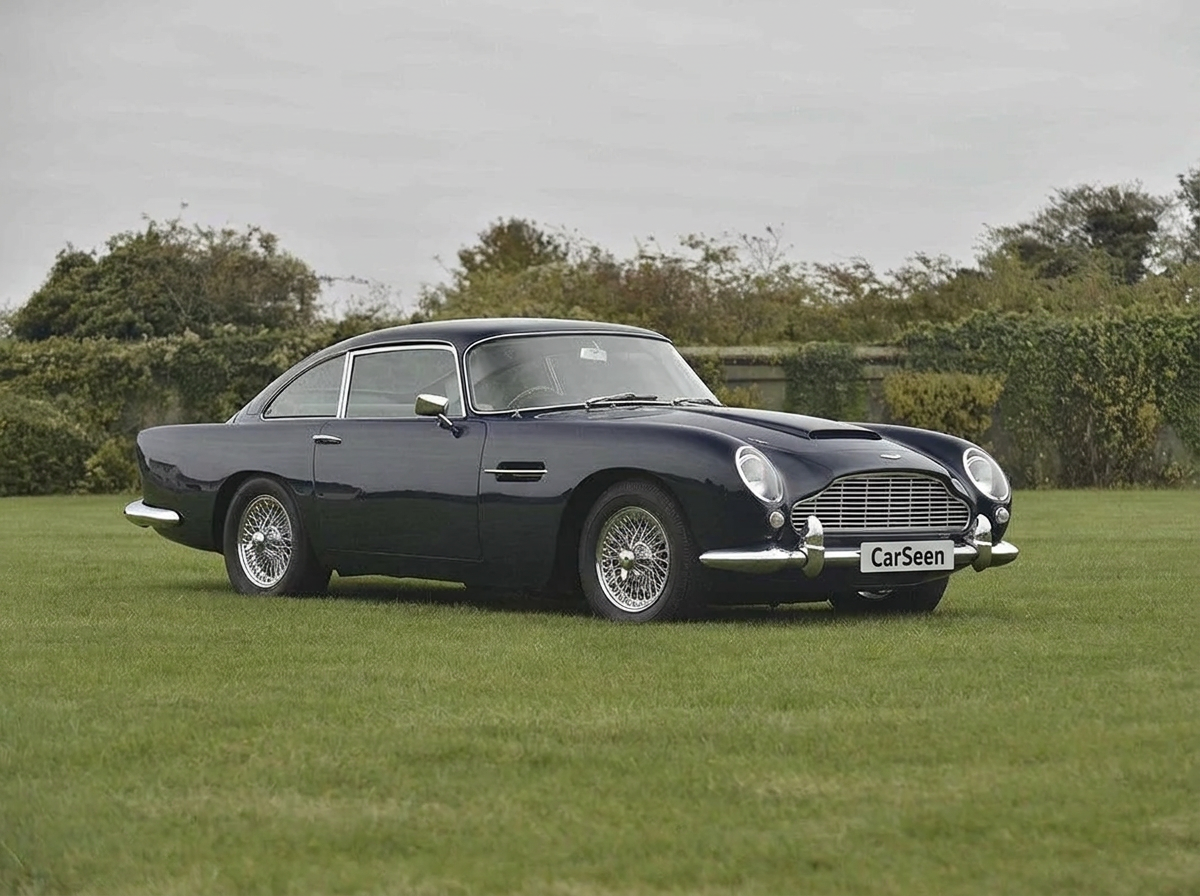
Deep grey Aston Martin DB5 on wire wheels in a green field
Contemporary Aston Martin DB5 of the type associated with Bond — not the Goldfinger chassis. CarSeen catalogue.

02The Italian Job / 1969

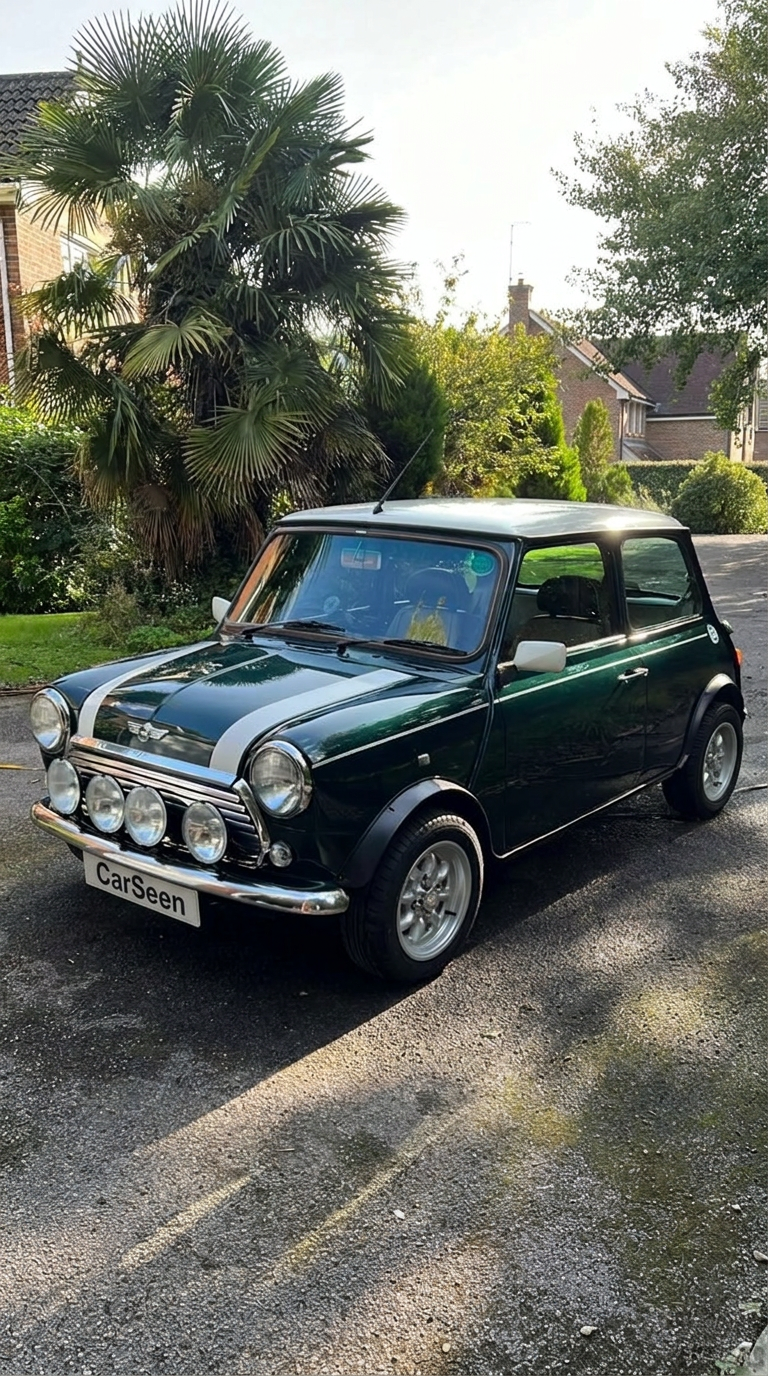
Austin Mini Cooper S

Turin. Three colours. Stairs that should not have been driveable. The joke was the car.

BMC supplied six new Coopers at trade price; roughly twenty-five further Minis were bought second-hand in Switzerland and dressed to match. Production accounts differ on survivors and replicas left behind — including an oft-told lock-up story in Turin — so treat counts softly. What is firm is the stunt language: Rémy Julienne’s team, Mk1 bodies with fictional plates to match the 1969 release, and a producer who reportedly refused Agnelli’s Fiats because the British Mini was the point.

The 2003 remake used different cars. Don’t conflate them. The silhouette that stuck is the Mk1 Cooper S in bold solid colour — cheek, scale, and getaway energy in one small package.

On set today:Compact getaway energy, period London or Turin, cheeky British heist tone. A tidy Mk1 Cooper S still photographs as The Italian Job without needing gold bars in the boot.

Dark green Mini Cooper with white bonnet stripe and spotlights
Classic Mini Cooper from the CarSeen hire catalogue — associated with the era of The Italian Job, not a production car from the film.

03Bullitt / 1968

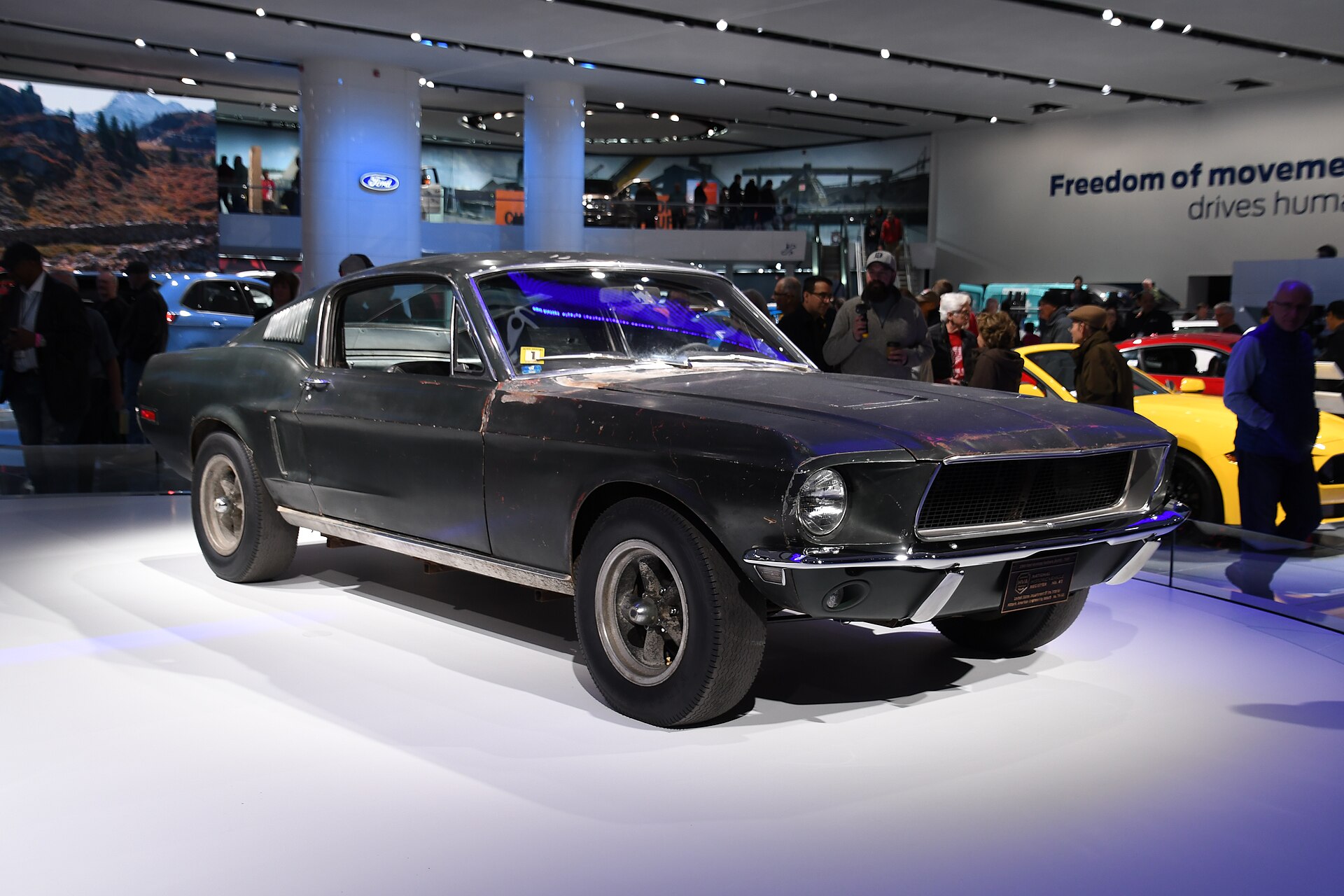
1968 Ford Mustang GT Fastback

Steve McQueen. Dark Highland Green. San Francisco hills that punish suspension and nerve.

Warner Bros / Solar Productions used two sequential 1968 Mustang GT fastbacks — one for stunts and jumps, one for hero close-ups. Hollywood builder Max Balchowsky stiffened the cars so the 390 V8s could hang with the Dodge Charger. Badges went. Grilles darkened. Torq Thrust wheels did the rest. The hero car stayed with the Kiernan family for decades; McQueen later wrote asking to buy it back. The chase remains one of cinema’s most studied edits — and a template for “real” street pursuit that still shows up in moodboards.

On set today:Muted green, minimal chrome, no hero badges. Useful for late-60s US grit or a knowing homage; UK productions often import or source lookalikes of the type.

Dark green 1968 Ford Mustang GT fastback on display at a motor show
1968 Mustang GT Fastback display associated with the Bullitt legend (2018 NAIAS). Wikimedia Commons — not a CarSeen catalogue car.

04Back to the Future / 1985

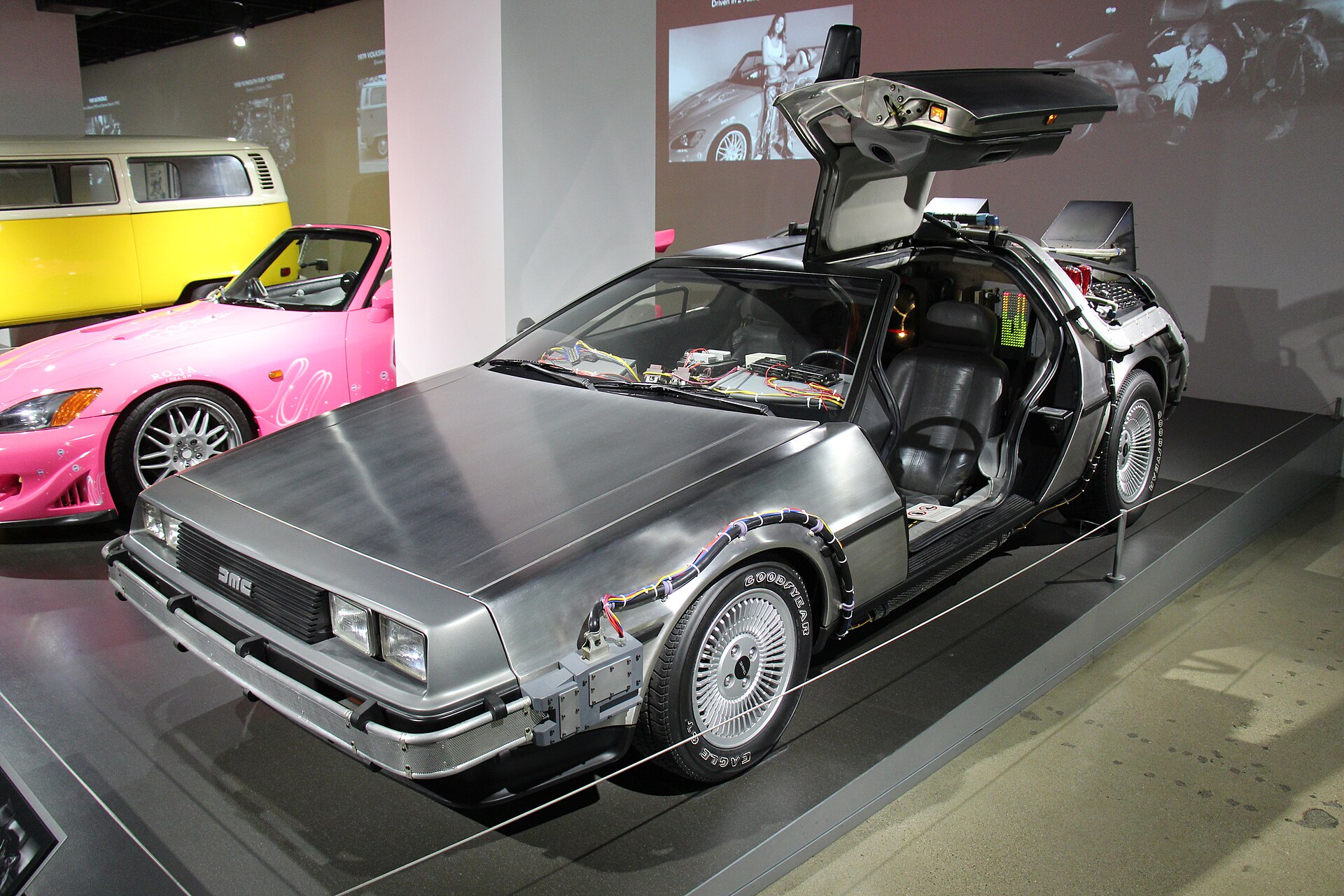
DeLorean DMC-12

Stainless gullwings. Northern Ireland. A car that looked like a spaceship before anyone mentioned flux capacitors.

Production used roughly half a dozen real DeLoreans plus a fibreglass flying shell — common synthesis, soft on exact grades. The cars were unreliable on set; some later received VW engines and buggy chassis for Western terrain in Part III. The company had already collapsed when the trilogy made the shape immortal. Doc’s on-screen rationale — style, plus stainless aiding “flux dispersal” — is half joke, half perfect casting note. UK angle that matters for CarSeen: built at Dunmurry. The afterlife rescued the brand’s memory more gently than any factory turnaround could have.

On set today:Instant time-travel / 80s sci-fi shorthand. Even an unmodified stainless DMC-12 reads as the movie; full time-machine dress is costume and VFX territory.

Stainless steel DeLorean DMC-12 dressed as a time machine
DeLorean DMC-12 in time-machine dress (museum / display). Wikimedia Commons — of the type associated with Back to the Future.

05Knight Rider / 1982–1986

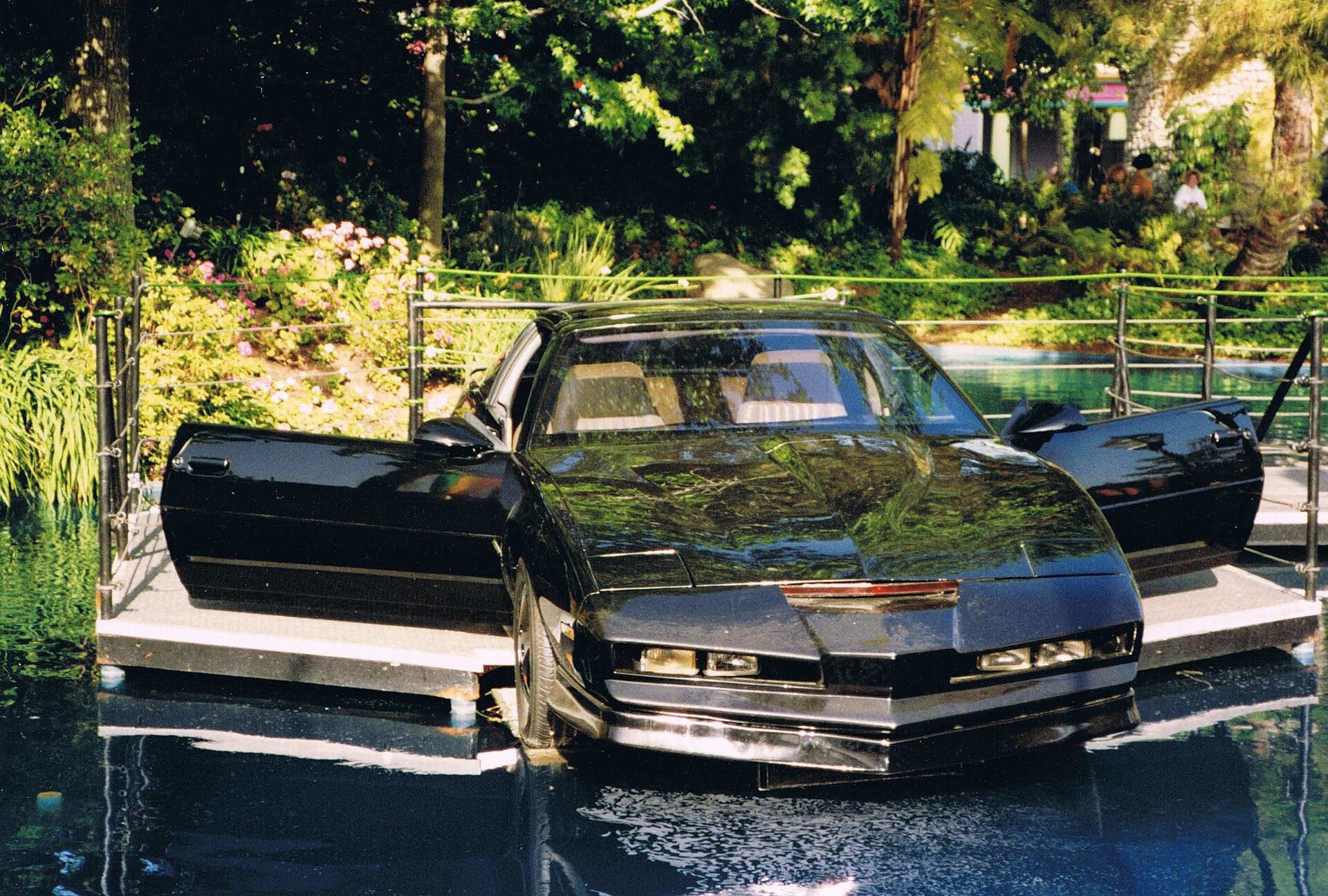
Pontiac Firebird Trans Am (KITT)

Black Trans Am. Scanner bar. A voice that made the car the co-lead.

Designed by Michael Scheffe and voiced by William Daniels, KITT was a fleet — often summarised as roughly twenty to twenty-three cars across hero, stunt, jump and shell grades. Early seasons ran short; lore (soft-claim) holds that GM sold damaged Firebirds to the production cheaply on condition they be destroyed after filming. Historians track only a handful of authentic survivors. Super Pursuit Mode and convertible variants arrived later; George Barris’s shop is part of that afterlife. Replicas are everywhere. Originals are rare.

On set today:Black Trans Am with scanner bar equals 80s AI-companion energy. For UK shoots, expect replica territory — still highly readable in commercials and period pieces.

Black Pontiac Firebird Trans Am dressed as KITT on display
KITT display at Universal Studios. Wikimedia Commons — theme-park / production-associated car, not claimed as a specific hero chassis.

06Ghostbusters / 1984

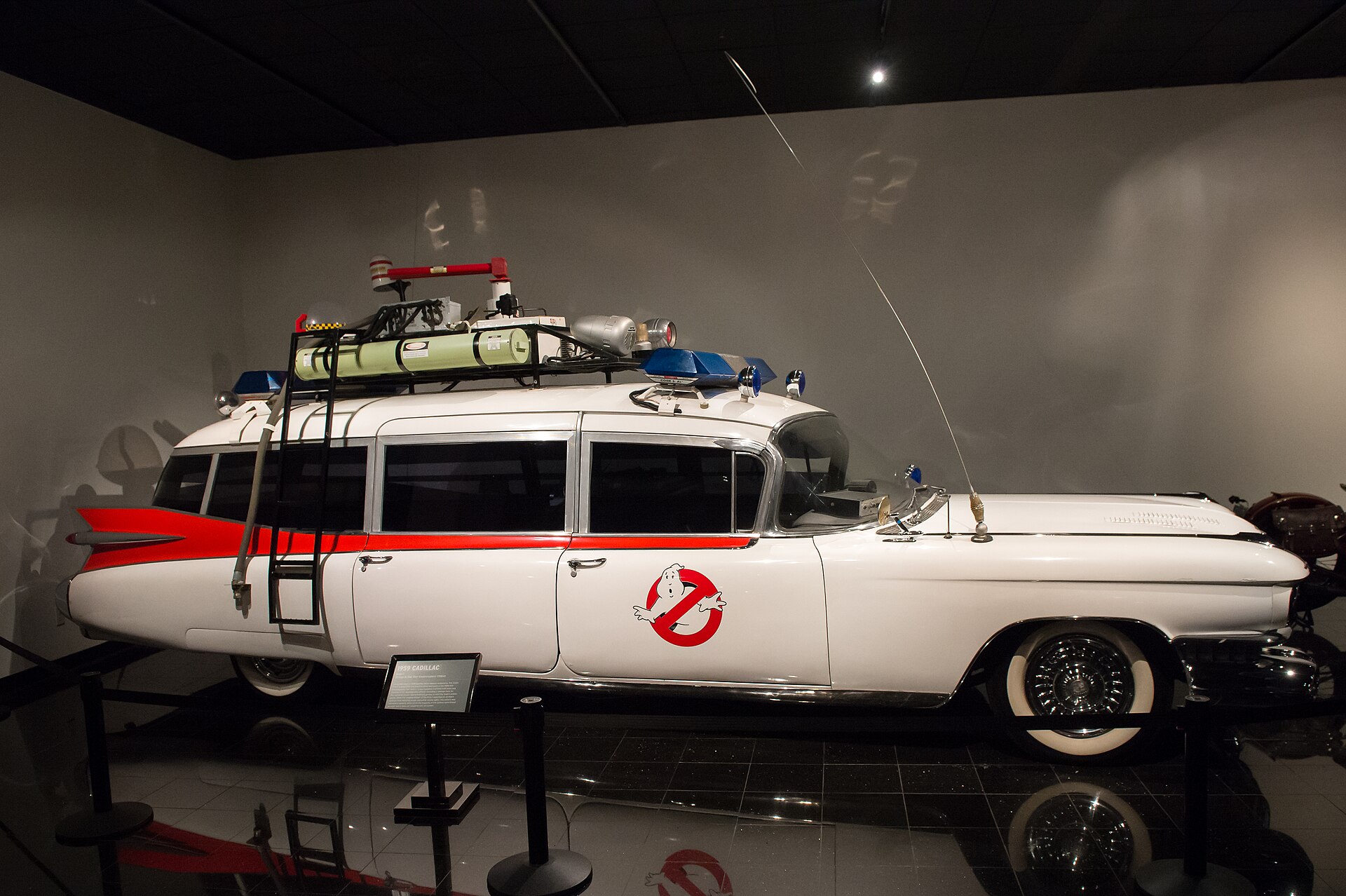
Cadillac Miller-Meteor Futura Duplex (Ecto-1)

Long wheelbase. High roof. Fins that belong to another planet. Then white paint so night shoots wouldn’t lose it.

The professional-car chassis — ambulance/hearse combination coachwork by Miller-Meteor — was chosen to carry bulky gear and look otherworldly. Early concepts reportedly leaned black; the finished hero went white. Secondary sources often cite a rough purchase around a few thousand dollars and a rushed build; mechanical unreliability plagued the shoots. Hardware details shaped by Steven Dane and others stuck in the culture harder than any single chassis number. Halloween still knows the silhouette.

On set today:Instant supernatural-comedy / paranormal-unit shorthand. True Miller-Meteor Duplexes are hard to source in the UK; white 1959 Cadillac professional cars or careful replicas do the wide-shot work.

White 1959 Cadillac professional car dressed as Ecto-1
1959 Cadillac Ecto-1 display (museum). Wikimedia Commons — associated with Ghostbusters, not a CarSeen hire car.

07The Italian Job / 1969 · and countless cameos

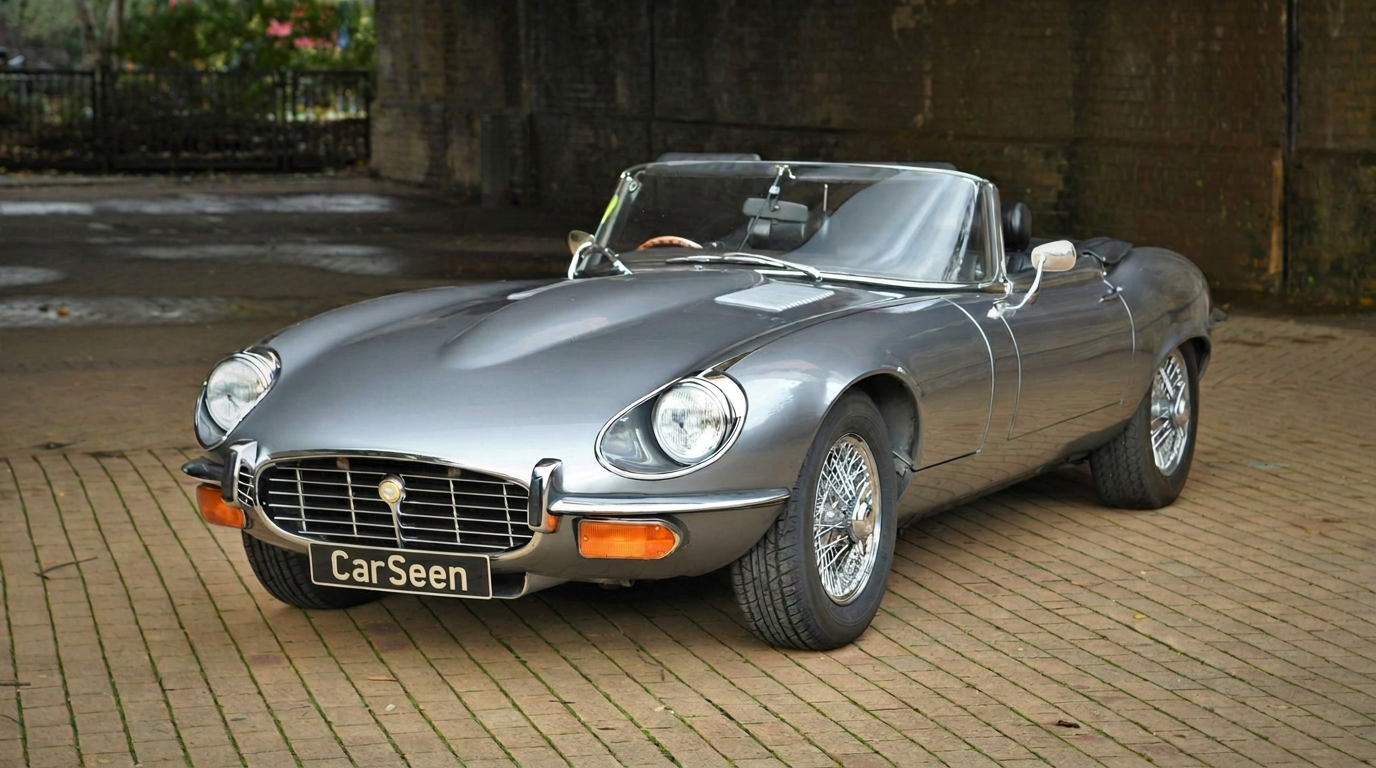
Jaguar E-Type

Enzo Ferrari’s alleged “most beautiful car” line is often repeated — treat it as soft folklore. What is not soft is how often the E-Type appears when a production needs 60s glamour without a speech.

In The Italian Job, producers bought two E-Types cheaply in period accounts; the Mafia Caterpillar sequence damaged them. The red roadster — early production lore, later restored and shown publicly — became one of the film’s “three fast cars.” Austin Powers later turned the shape into a wink (“Shaguar”). Between those poles sit decades of period dramas, ads and establishing shots. Roadster vs fixed-head changes the mood: open equals romance; closed equals quieter grandeur.

On set today:Period romance, swinging London, stylish getaway, or a knowing Powers nod. Specify series and colour early — the silhouette is famous; the details sell the decade.

Silver Jaguar E-Type roadster parked beneath a stone arch
Jaguar E-Type from the CarSeen hire catalogue — of the type associated with 1960s screen glamour, not a specific film chassis.

08Inspector Morse / 1987–2000

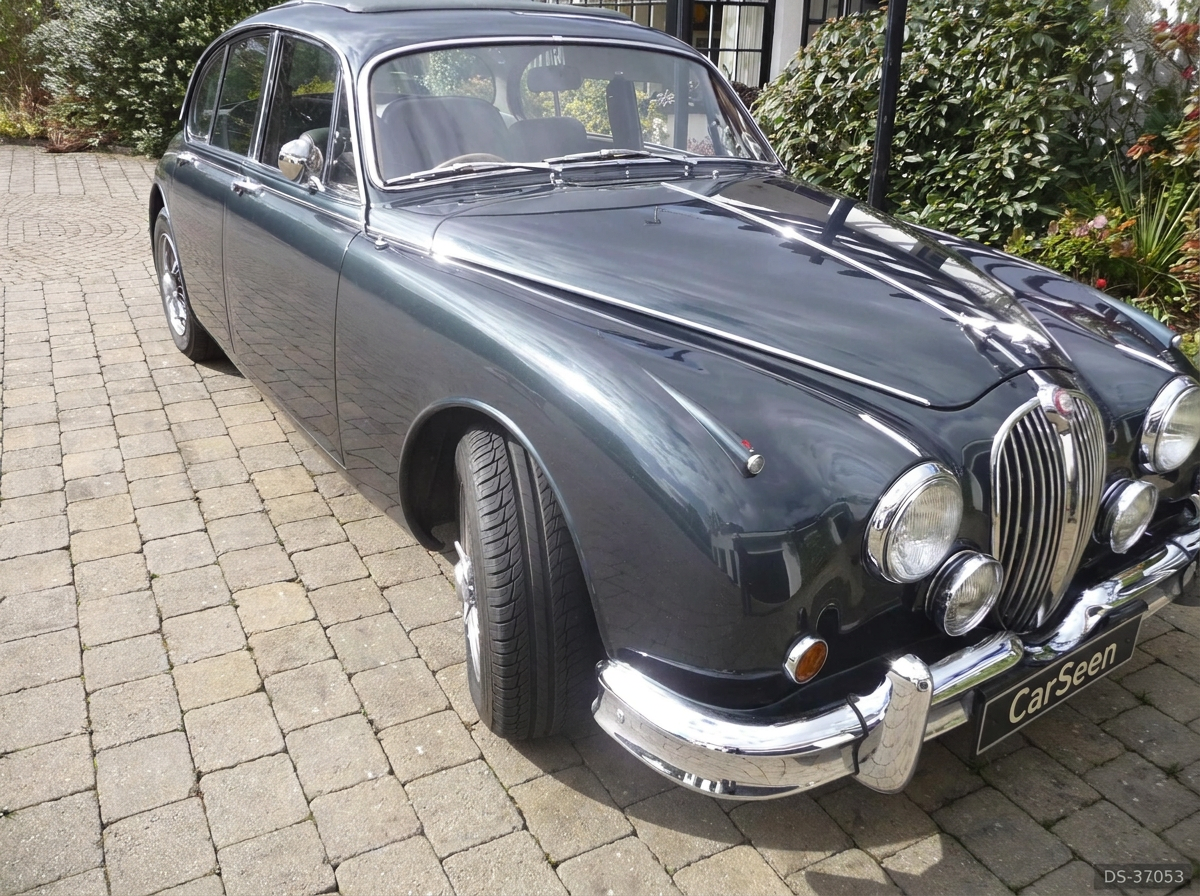
Jaguar Mk2

The books had Morse in a Lancia. John Thaw wanted a Jag. Producers found a scrapyard Mk2 so tired it was pushed into early shots.

That burgundy-ish saloon — registered 248 RPA in series lore, with a non-original black vinyl roof that became part of the silhouette — appeared across all 33 episodes. After the run it passed through competition prizes and auction (around £53,000 at Coys in 2002), then deeper restoration. A Top Gear-commissioned survey later voted it the nation’s favourite TV cop car. Earlier screen life had already used Mk2s as bank-robber / underworld shorthand; Morse fixed the other face: thought, Oxford stone, opera on the radio.

On set today:Thoughtful British detective energy. A burgundy Mk2 (vinyl roof optional but iconic) still casts the character before the actor speaks.

Classic Jaguar Mk2 saloon parked on a quiet street
Jaguar Mk2 from the CarSeen hire catalogue — associated with the Morse-era detective silhouette, not the series hero car.

09The Professionals / 1977–1983

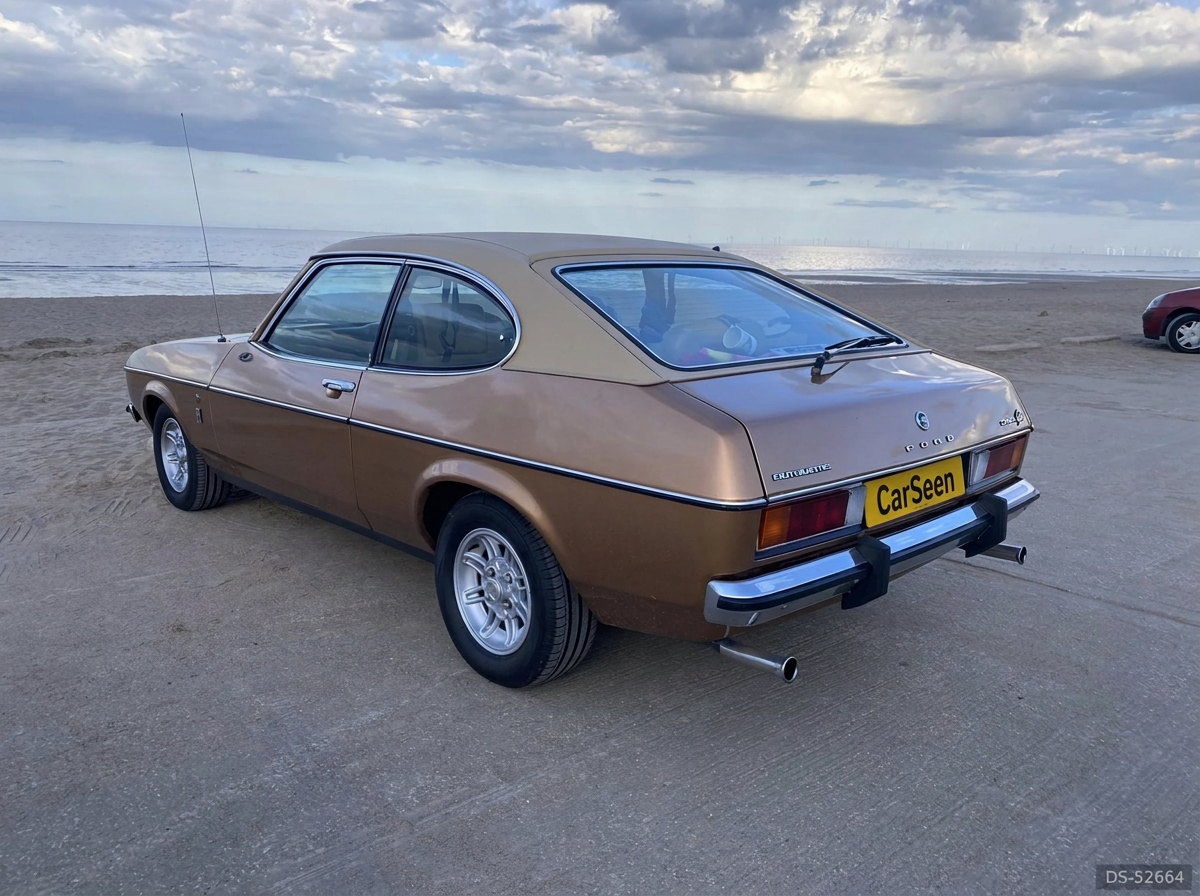
Ford Capri

CI5 energy. Roundabouts. Cardboard boxes. Britain’s answer to the Trans Am — if the Trans Am had grown up on the Thames.

Series 1 leaned on British Leyland supply and continuity headaches. From Series 2, Ford UK’s press fleet stepped in — Capris, Escort RS2000s, Granadas — often cited as textbook “show on Saturday, sell on Monday” placement. Multiple Capris rotated through damage and returns; enthusiasts still track survivors by plate lore. Minder, Brannigan and earlier Mk1 cameos add texture, but The Professionals locked the Mk3 3.0S — Strato Silver, Tibetan/Solar Gold — into UK cultural memory.

On set today:Late-70s / early-80s British action grit. A 3.0S in silver or gold still telegraphs the era to audiences of a certain age.

Ford Capri parked on a suburban British street
Ford Capri from the CarSeen hire catalogue — of the type associated with The Professionals, not a press-fleet survivor from the series.

10Woven through London cinema

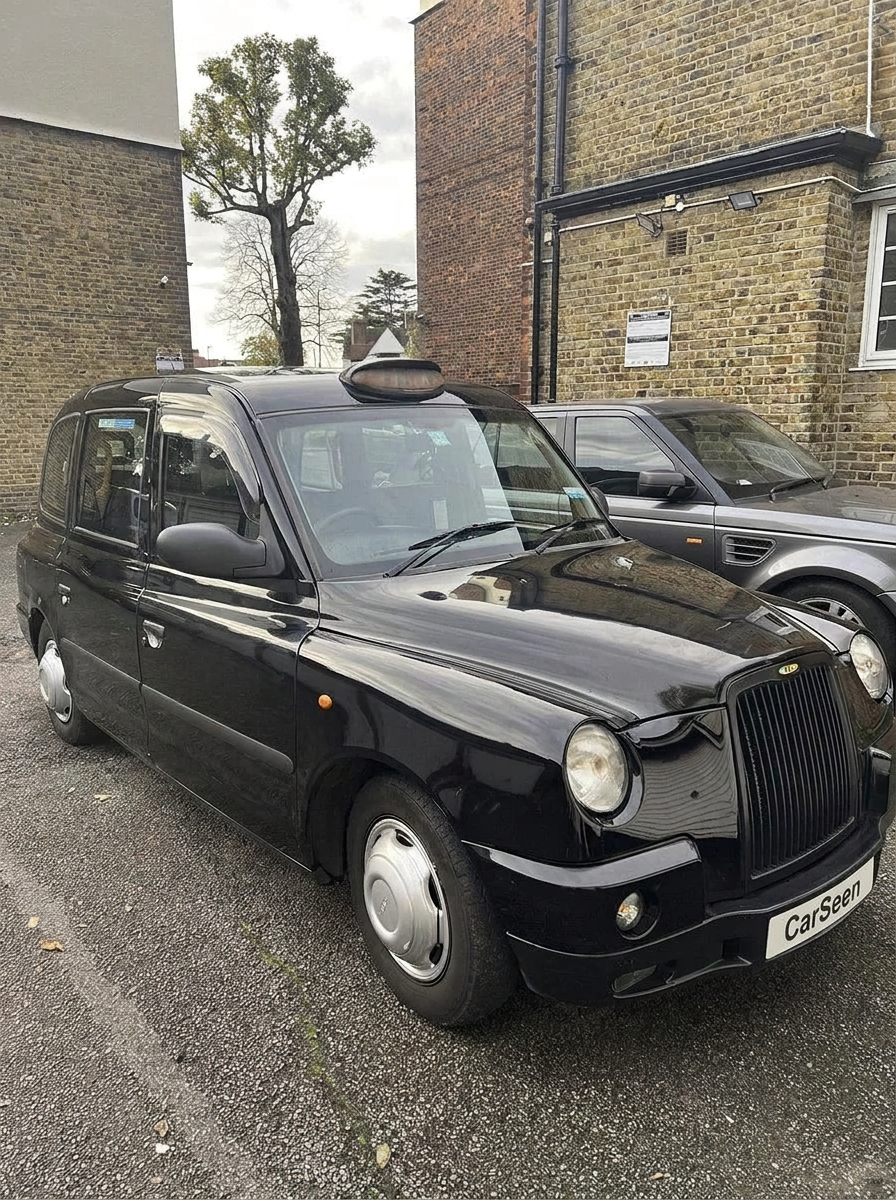
London Black Cab (Austin FX4 lineage)

Four doors. Enclosed luggage. A silhouette that sells “we’re in London” in a single cut.

The Austin FX4 family ran from the late 1950s into the 1990s (Austin → Carbodies → LTI), with successors keeping the outline. Film and TV treat picture-ready cabs as location shorthand — city, class, anonymity, confession booth on wheels. Appearances run from Carry On Cabby and The Knowledge through The Long Good Friday, Night on Earth, A Fish Called Wanda, Paddington, Bond establishing shots, Sherlock and endless commercials. Prefer that weave over inventing one hero chassis. The Knowledge culture sits behind the glass; the camera mostly needs the black body and the upright stance.

On set today:Instant London geography. Period FX4 for 60s–90s; modern TX / LEVC for contemporary. Soft: still one of the fastest ways to cast the city.

Black London taxi of the Austin FX4 lineage parked on a city street
London black cab from the CarSeen hire catalogue — atmospheric London shorthand, not a specific screen-used chassis.

Need one of these silhouettes — or something adjacent — for a shoot?

Tell us the year, the character, the city. We’ll cast the street.

Image credits: Wikimedia Commons (Bullitt Mustang display CC BY-SA 2.0 Joe Ross; DeLorean time machine CC BY 2.0 Sicnag; KITT at Universal CC BY-SA 4.0 Morn; Ecto-1 museum CC BY 2.0 mark6mauno). Catalogue photography © CarSeen / owners — contemporary hire cars of the type associated with the named productions; never claimed as screen-used originals.