Journal · 8 October 2026 · CarSeen team
Period-correct cars for a 1990s or 2000s drama
Published · Updated
The recent past is now a period. Stories set in the 1990s and 2000s are everywhere, from true-crime dramas to coming-of-age series and nostalgic commercials, and they need cars to match. Our existing guide covers period-correct cars for the 1960s, 70s and 80s. This one picks up where it leaves off.
For a series set in either decade, our TV car hire guide explains how to brief hero cars and background traffic together.
Why recent-period cars are surprisingly hard
Cars from the 1960s are often cherished classics, kept in good condition by enthusiasts. Ordinary cars from the 1990s and 2000s are a different story. Many were simply driven until they wore out and were scrapped. The everyday hatchback a family owned in 1997 is now harder to find in original, unmodified condition than plenty of older classics. Many survivors have been modified, with new wheels, lowered suspension or tinted windows, which can date them wrongly on screen. Brief early, and say whether you need "standard" or whether modifications are fine.
The everyday cars of the 1990s
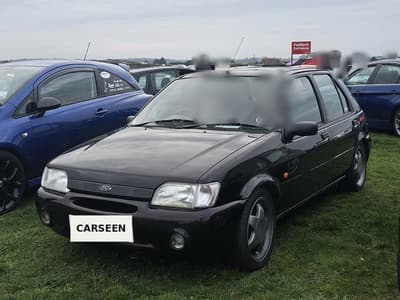
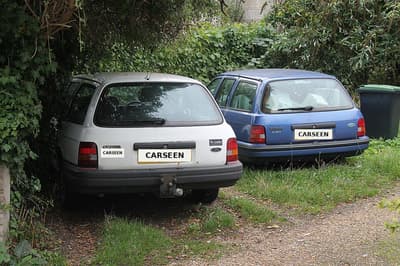
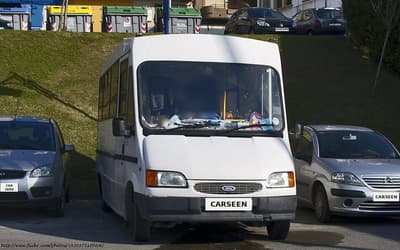
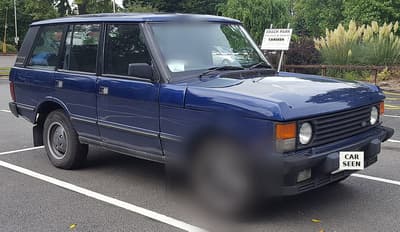
A believable 1990s British street is mostly mass-market hatchbacks, saloons and estates. Fords such as the Fiesta, Escort and Sierra, alongside Vauxhall Astras, Corsas and Cavaliers, Rover and Austin models, the Peugeot 205 and 306, Volkswagen Golfs and Japanese hatchbacks from Nissan, Toyota and Honda, are the sort of cars that filled driveways and supermarket car parks. Executive characters might drive a BMW 3 or 5 Series, a Mercedes or a Rover saloon. Work vehicles such as the Ford Transit and Escort van fill out the background.
Remember the mix. A street in 1995 would still include plenty of 1980s cars, so don't cast only cars from the year itself.
The everyday cars of the 2000s
By the 2000s, the shapes softened and the roads filled with Focuses, Fiestas, later Astras and Corsas, Golfs, Clios, Puntos and a growing number of people carriers and soft-roaders. Silver and grey became common colours, which matters if you're aiming for an authentic, slightly drab palette. A 2005 street would still include many 1990s cars.
Colours and trim
Colour palettes date a car as surely as its shape. Many 1990s cars came in bold solid and metallic colours, such as reds, greens, blues and teals, while silver and grey grew more common through the 2000s. Trim levels matter too: steel wheels with plastic hub caps say "base model", while alloys, body kits and spoilers say something else. Tell us the character and their budget, and we'll suggest cars that fit, down to the trim.
Police cars, vans and cabs
Police vehicles do a lot to date a scene. British police cars of the 1990s and 2000s moved through several livery styles, and high-visibility chequered liveries appeared during this period. Check reference photos for the exact year and force area your story is set in. For London stories, the black cab moved from the FX4 and Fairway family through to the TX4. Our police and emergency vehicles page shows what's in the catalogue, including period police cars.
Number plates do half the work
For 1990s stories, prefix plates (one letter, then numbers, then three letters) carry the date. From September 2001, the current-style plate with its two-number age identifier takes over. A 2001-format plate in a 1999 scene is an easy mistake to make. Our guide to number plates for filming explains the formats and the rules.
Condition and character
Recent-period cars shouldn't all look showroom-fresh. A 1998 car in a 1998 scene would usually be a few years old, with everyday wear: a scuffed bumper, a faded badge, a parking permit in the windscreen. Agree with your art department how much dressing and ageing is acceptable, and check what each owner allows.
Character matters as much as accuracy. The same street might hold a student's tired hatchback, a sales rep's company saloon, a young couple's first new car and a builder's van. Tell us who lives where in your story and we'll cast accordingly.
Inside the car
If cameras go inside, the interior has to be right too. Cassette decks and early CD players, chunky early mobile phones, paper road atlases and the first sat-nav units all date a car's cabin. So do modern additions an owner may have fitted, such as a touchscreen stereo, a phone holder or a dash cam. Ask for interior photos when you shortlist, and agree with the owner whether any modern kit can be removed or hidden for the shoot.
Where 1990s and 2000s cars appear on screen
These decades turn up in more than period dramas. Flashback sequences, true-crime reconstructions, documentaries, nostalgic commercials and music videos with a Y2K look all need cars from the period. A reconstruction needs particular care, because the audience may compare the scene with real photographs. Ask for cars of the right make, model, colour and age, and plan time to check the details against reference material.
Casting a recent-period street
- Give us the year and place. A 1993 northern town needs different cars from a 2006 London suburb.
- Say how many cars are featured and how many are background. Background vehicles are where period mistakes usually slip through. See background cars for film.
- Flag modifications. Tell us whether period-correct "standard" cars are essential.
- Check plates and details against your date.
- Plan continuity if cars return across several blocks.
Browse 1990s cars and 2000s cars, or read period cars for film.
Related: Browse picture cars for film and TV, explore period cars for film by decade and TV car hire, or read about choosing a picture car hire company and picture car rental.
Casting the 1990s or 2000s? Send us a brief with your year, setting and the number of cars, and we'll build a believable mix.
Cars featured in this guide
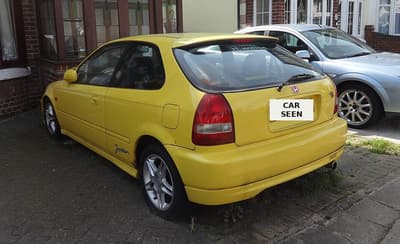


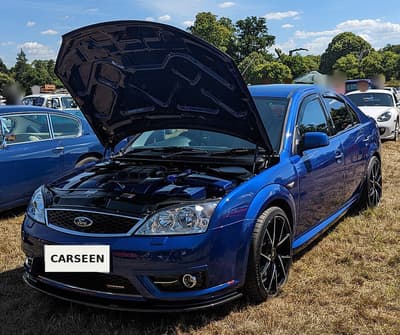
FAQs
Why are 1990s cars hard to find for filming?
Many everyday 1990s cars were driven until they wore out and were scrapped, and many survivors have been modified. Original, unmodified examples can be harder to find than older classics.
What cars should be in a 1990s British street scene?
Mostly mass-market hatchbacks, saloons and estates from makers such as Ford, Vauxhall, Rover, Peugeot, Renault, Volkswagen and the Japanese brands, plus vans, older 1980s cars and a few executive saloons.
How do number plates date a 1990s or 2000s car?
Cars registered between August 1983 and August 2001 have prefix plates with a year letter at the start. From September 2001 the current format uses a two-number age identifier.
Should recent-period cars look brand new?
Usually not. Most cars in a real street were several years old, so everyday wear and a mix of ages looks more convincing.
Related reading
- Picture car hire companies in the UK: how to choose
- How to film driving scenes: low loaders, A-frames, tracking vehicles and static set-ups
- What does a picture car coordinator do, and how do you brief one?
- Filming with police cars and uniforms in the UK: what the rules say
- ULEZ and the Congestion Charge: what period picture cars pay on a London shoot
- Number plates for filming: dating, period plates and the rules